CO-CREATION module: co-creation processes for energy citizenship and communities
Article: Introduction to co-creation, challenges and opportunities
The concept of “co-creation” encompasses those actions that actively involve, collaborate with, or empower citizens within local authorities’ policy-making processes. More specifically, the establishment of co-creation processes in energy transition include citizens´ engagement in the i) design of policies and laws, ii) the co-production of solutions and innovations, iii) the co-implementation of projects and initiatives and eventually, iv) the sharing of benefits coming from green transition processes.
The interest and attention towards co-creation and, more in general, towards collaborative approaches in energy planning and climate neutrality actions has been growing in the last decades. In fact, the achievement of energy transition goals is strongly related to the fundamental role played by individuals and communities. In these innovative and more collaborative governance frameworks, individuals are not to be seen anymore just as energy “consumers”, but as empowered actors playing an active role in the design, development, and deployment of energy initiatives.
Also at the EU level, the recognition of the need for the integration and institutionalization of co-creative and collaborative processes through dialogue, engagement, debate, and larger participation of individuals and communities, has led to the implementation of a set of measures and policies enabling a more decentralized energy system. Several social, political, and economic benefits come with the implementation of more open and collaborative governance arrangements.
First, co-creation plays a crucial role in capturing highly valuable insights from citizens and enabling civic perspectives to be incorporated into innovative solutions or energy policies. This contributes not only to their robustness and legitimacy but also to the level of trust and openness of citizens toward policy makers. Co-creation enhances democratic participation and deliberation – making citizens more eager to play an active role in decision-making and also to transition.
The city of Ghent has encouraged its citizens to actively participate in climate neutrality actions by establishing in 2013 a citizen-led Ghent en Garde Food Policy Council. The Council involves various stakeholders and organizations in the design and implementation of the activities. Today, the Food Council runs education and awareness programs, whilst advising local administrators on food and climate neutrality actions and policy. This process has strengthened social cohesion and built a more resilient community.
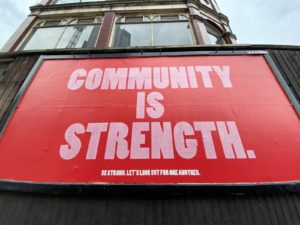
It also has been observed that when activities and initiatives are co-created, they are more likely to be adopted by a larger number of people because the solutions respond to local needs. Therefore, co-creation processes do not only allow to mainstream top-down approaches but also, and foremost complement and strengthen top-down approaches addressing energy transition and climate neutrality and allowing for more dynamic and adaptive governance.
Likewise, energy transition requires a transdisciplinary approach. Co-creation fosters knowledge exchange and mutual learning among experts from diverse fields and backgrounds, which is fundamental to the development and implementation of effective and holistic energy transition strategies.
From a financial perspective, co-creation and collaborative arrangements allow us to challenge traditional financial frameworks and test more flexible and innovative ways to fund energy transition. For instance, the establishment of a City Lab in Bristol enabled the local administrator, stakeholders, and the citizenry to explore how alternative financial mechanisms, such as investment-based crowdfunding- could finance energy actions whilst fostering social benefits.
However, one cannot underestimate the challenges that come with the establishment, implementation, and monitoring of a co-creation process.
To begin with, the process is resource-intensive. Local governments might lack the human and/or financial resources to establish a meaningful and valuable process for a sufficient period.
In many cases, without careful planning and honest intent, co-creation is reduced to an empty and tokenistic initiative where solutions are rather top-down and local needs are not addressed. Yet, the recruitment of participants can also be challenging as much as the setup of the process. The lack of time, knowledge, and/or skills can represent a barrier for individuals to participate.
In addition to that, co-creation processes can reiterate the dynamics of exclusion. Reaching out, building trust, and engaging marginalized communities can represent a major challenge. The risk is in fact to favor the participation of the “usual suspects”- having the resources, time, and knowledge to participate, and excluding the perspectives of those who might be more affected by problems and/or potential solutions- such as households suffering energy poverty.
Another obstacle can be represented by the management of conflicts and different interests that may come from the different interests, expectations, and values of the stakeholders.